
Roughly 5,000
Young adults followed
Panel cohort in Yaoundé since 2018.
Yaoundé panel, linked field experiments, and evidence notes.
A longitudinal Yaoundé cohort gives the research agenda a concrete base for tracking the school-to-adulthood transition.
Roughly 5,000
Panel cohort in Yaoundé since 2018.
20
Schools named in the baseline sample.
Wave 2
Wave 2 completed in 2019.
The research note documents longitudinal follow-up. The baseline design page documents secondary-school sampling across Yaoundé.
The agenda connects demographic change to the practical question of whether young people can move into work, responsibility, and contribution.
The research agenda addresses uneven demographic change, inequality between countries, inequality within countries, and the transition from school into work and adult responsibility.
Public materials connect the evidence agenda to risk, work, learning, trust, and social integration.
Field references show how trust, local context, and education technology shape whether support tools are actually used.
Cornell-linked public references connect PICHNET to a field deployment that reached 546 students across 3 schools and tested support tools under local conditions.
Story: The Greatest Generation? and related reporting on student preparation and transition.
Public references connect the experiments to trust, uptake, and local context.
The publication archive helps readers move from high-level claims to source notes, study references, and related public materials.
Follow the Yaoundé panel to see how school, work, and adulthood questions are tracked over time.
Read the panel survey noteUse the agenda note to connect inequality, fertility transition, youth human capital, and policy design.
Read the agenda noteThe CHI 2019 and ICTD 2020 references point readers toward education-technology and youth-support work tied to Cameroon.
PICHNET's research work also creates rooms where scholars, journalists, students, and public communicators can work from shared evidence.
Scholar training, workshop participation, and Francophone collaboration appear across the research pages.
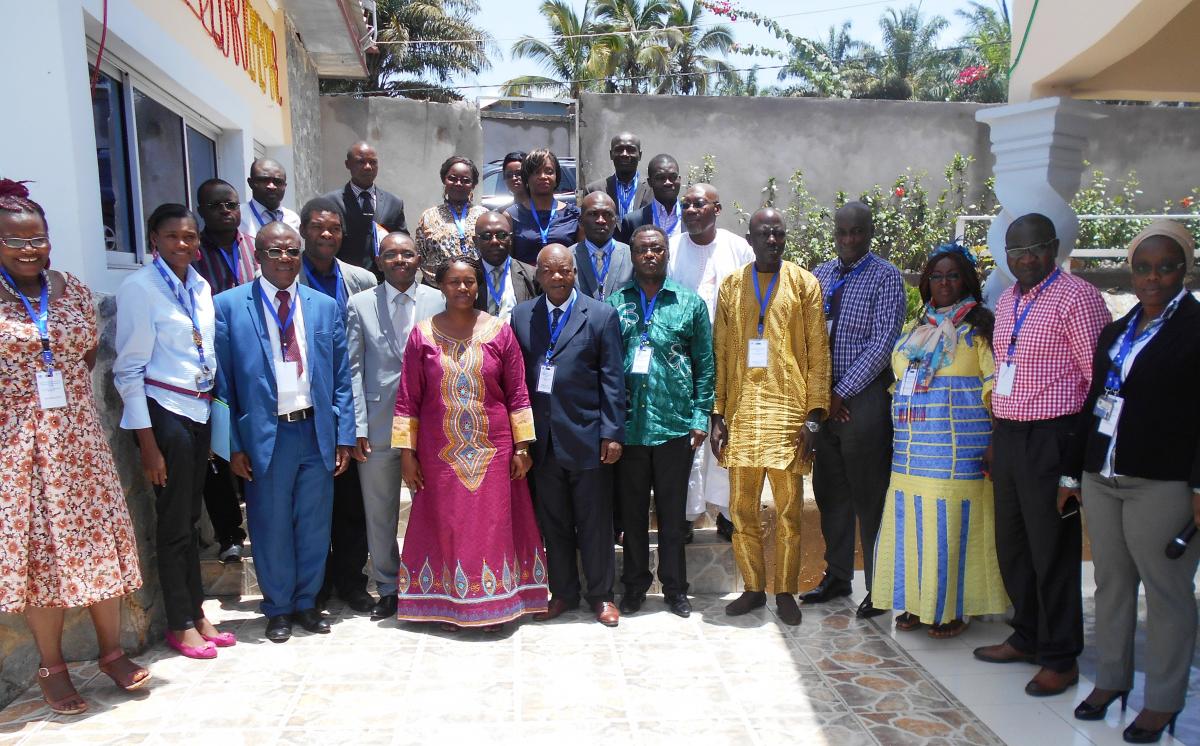
Yaoundé workshops with IFORD and partners brought researchers and communicators together.